





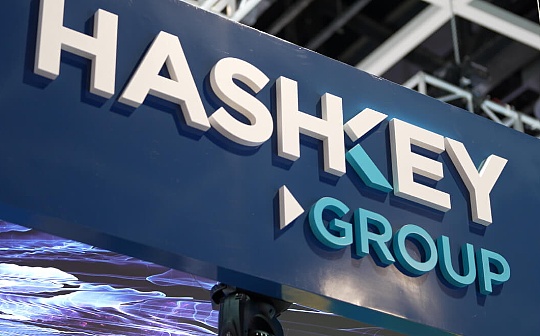
Hong Kong's stock exchange disclosed on December 1st that HashKey Holdings Limited has passed its listing hearing, marking a crucial step toward its IPO. The joint sponsors for the offering are J.P. Morgan, Guotai Junan International, and Haitong International. This IPO is expected to raise up to USD 500 million, signifying this licensed Hong Kong virtual asset trading platform's formal entry into the capital market.
I. Prominent Background of Core Shareholders
HashKey's shareholder structure highlights its connection to the "Wanxiang Group." Chairman and CEO Xiao Feng has led the company since 2019 and also serves as Vice Chairman of Wanxiang Holdings; Non-Executive Director Lu Weiding is the Chairman of Wanxiang Group. Both hold shares through wholly-owned companies. This deep-rooted industrial capital and resource network provides HashKey with unique strategic support.
II. Profitability Dilemma: High Investment and Sustained Losses
Despite having diversified business segments encompassing trading commissions, asset custody, staking services, Web3 events, and asset management, HashKey remains unprofitable. In the first half of 2025, the company's operating loss reached HK$402 million. Major cost items include R&D expenses (HK$225 million), marketing costs (HK$181 million), and administrative expenses (HK$120 million).
Notably, its R&D expenditure as a percentage of revenue has remained persistently high over the past three years, consistently exceeding 75%. Within marketing and administrative costs, employee compensation constitutes a significant portion. Meanwhile, user activity appears subdued: as of June 2025, while registered users reached 1.447 million, monthly trading clients numbered only around 14,000, with trading volume also showing a declining trend.
Furthermore, HashKey engages in frequent related-party transactions with Wanxiang blockchain entities, having paid nearly HK$350 million in technology development service fees since 2024. The company states such transactions are "in line with market practices and offer cost advantages."
III. Business Layout: Full Licensing and Ecosystem Expansion
Centered around its licensed exchange business, HashKey's platform HashKey Pro has obtained permission from Hong Kong's Securities and Futures Commission and supports trading in over 80 digital assets. Simultaneously, the company actively expands into derivatives, over-the-counter (OTC) trading, and on-chain services. Its staking platform, HashQuark, ranks first in Asia in terms of assets under management.
In terms of innovative businesses, HashKey has deployed the Ethereum Layer-2 network HashKey Chain to promote real-world asset tokenization. It has also strategically invested in stablecoin service provider RD Technologies, responding to new opportunities brought by the implementation of Hong Kong's Stablecoin Ordinance.
IV. IPO Motivation: Policy Dividends and Industry Momentum
HashKey's push for an IPO aligns with several key factors: On one hand, Hong Kong has been continuously refining its virtual asset regulatory framework since 2022, creating a development window for compliant enterprises. On the other hand, since 2025, a wave of IPOs has swept through global crypto companies, with firms like Circle and Bullish going public, increasing market attention on the sector.
Through the listing and fundraising, HashKey plans to allocate capital for technology upgrades, market expansion, and compliance strengthening. Specific plans include developing a "Crypto-as-a-Service" platform, enhancing cloud infrastructure, expanding the R&D team, and deepening institutional cooperation and risk management.
V. Conclusion: A Critical Leap in the Compliance Process
HashKey's IPO represents not only a pivotal moment for the company's own development but also a significant case study for Hong Kong's ambition to build a virtual asset hub. Against the backdrop of the industry gradually moving towards standardization and the capital market progressively opening, whether it can leverage the listing to break through its profitability bottleneck and expand its ecosystem influence remains to be tested by the market.